
In het kort
- Hibiscus komt van de gedroogde kelkblaadjes van Hibiscus sabdariffa
- Heet zobo in Nigeria, bissap in Senegal, agua de Jamaica in Mexico
- De smaak is zuur, richting cranberry, niet bloemig
- De rode kleur komt van anthocyanen, er wordt niets toegevoegd
- Cafeïnevrij, zonder kunstmatige ingrediënten
Wat is hibiscus precies?
Hibiscus komt van de gedroogde kelkblaadjes van Hibiscus sabdariffa, een bloeiende plant die al heel lang wordt gedronken in West-Afrika, het Midden-Oosten, het Caraïbisch gebied en Zuidoost-Azië.
Je kent het misschien als:
- Zobo in Nigeria
- Agua de Jamaica in Mexico
- Bissap in Senegal
- Zure thee, of gewoon "die diepbruinrode kruidenthee", in het wellnessschap
Wat opvalt is hoeveel verschillende culturen onafhankelijk van elkaar bij dezelfde drank uitkwamen: blaadjes laten trekken, zoeten naar smaak, koud serveren. Het is een van de meest gedronken plantendranken ter wereld, en de meeste mensen komen het tegen zonder ooit de naam te leren.

Drie redenen waarom hibiscus in het glas belandt
1. Die kleur
Hibiscus geeft een van de diepste natuurlijke rode kleuren uit de plantenwereld, en doet dat binnen enkele minuten in koud water. Geen kleurstof, geen concentraat. Het is de reden dat de drank er in elk land hetzelfde uitziet.
2. De zuurheid
Hibiscus is echt zuur, dichter bij cranberry of zuring dan bij een bloemige thee. Die zuurgraad is de reden dat het in West-Afrika en Mexico traditioneel naast of na rijk, zwaar eten wordt geserveerd. Zuur snijdt vet weg op het gehemelte, en dat is keukenlogica, meer niet.
3. Het vult het gat van frisdrank
Hibiscus zelf brengt die scherpte mee, zonder cafeïne en zonder kunstmatige zoetstoffen.
Drink je al jaren zoete bubbels, dan stelt een zure variant je smaakverwachting bij. Dat is een kwestie van smaak, en smaak past zich sneller aan dan de meeste mensen denken.

Waarom zit hibiscus in Good Jamu?
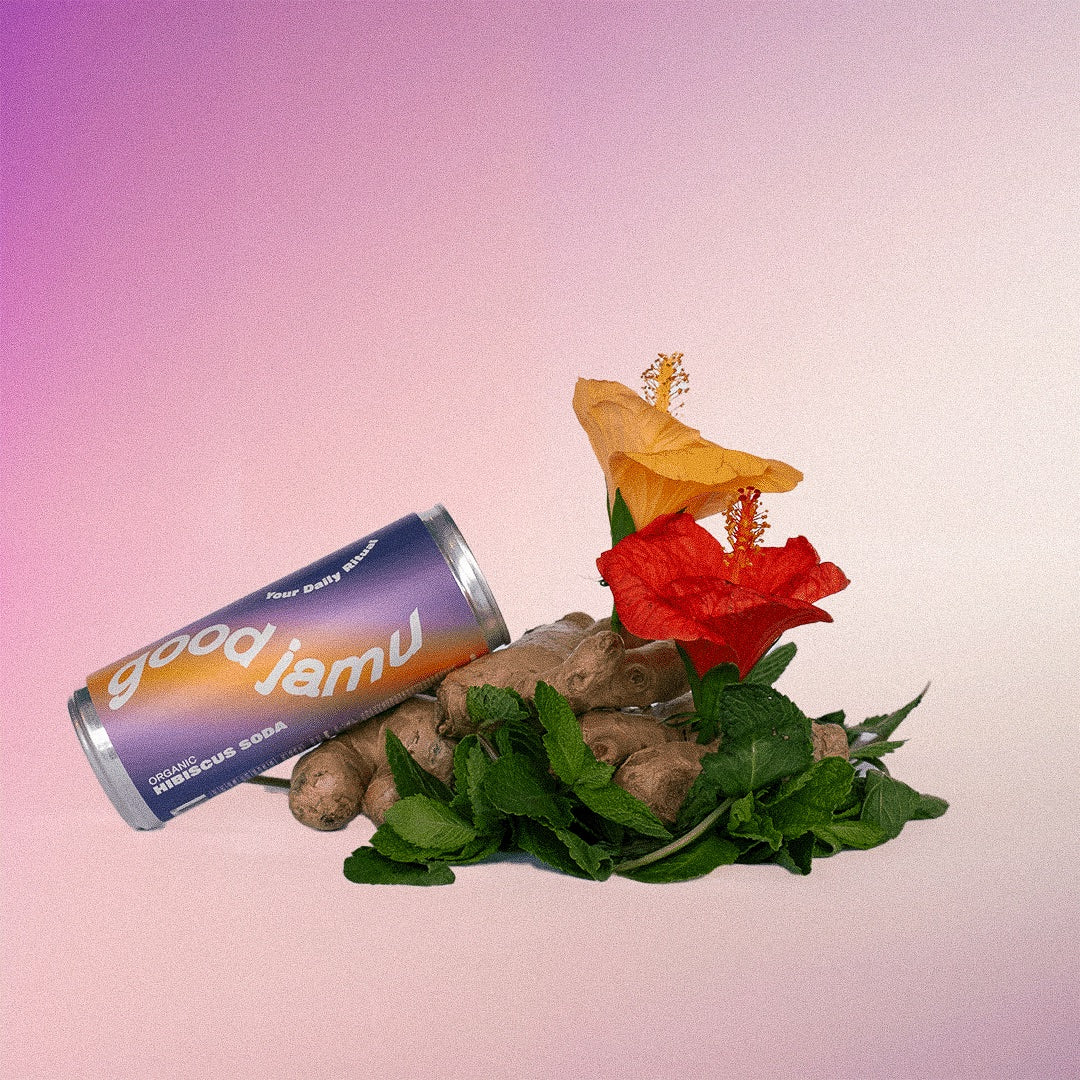
We voegden hibiscus toe aan onze Purple Can om drie redenen:
- Het brengt balans in de uitgesproken smaak van gember
- Het tilt de beleving op, in kleur en in smaak
- Het maakt het wisselen van frisdrank vanzelfsprekend
Het heeft de elegantie van wijn, de verfrissing van frisdrank en eeuwen geschiedenis in één glas.

Kun je het elke dag drinken?
In grote delen van de wereld doen mensen dat al. Zobo, bissap en agua de Jamaica zijn alledaagse dranken, thuis geserveerd en op straat verkocht, in gewone glazen porties.
Zoals bij elk eten of drinken geldt: heb je vragen over wat bij jou past, dan is je huisarts of apotheker de juiste persoon om het aan te vragen.
Hoe smaakt hibiscus?
Denk aan cranberry die granaatappel tegenkomt: zuur, bloemig en verfrissend schoon.
Sommigen zeggen dat het hen doet denken aan een droge kombucha, of aan een rode wijnspritzer zonder de alcohol en zonder de fermentatietoon.
Hoe drink je hibiscus?
Je hoeft er niet ingewikkeld over te doen. Drie makkelijke manieren:
- Over ijs, met een partje limoen
- Geshaket met rozemarijn, geserveerd in een coupe voor een mocktail
- Aangevuld met bruiswater voor een lichtere spritz
Veelgestelde vragen
Zit er cafeïne in hibiscus?
Nee. Hibiscus is van nature cafeïnevrij, net als de rest van ons assortiment.
Waarom wordt het na het eten geserveerd?
Gewoonte, vooral. Een zure, koude drank is verfrissend na rijk eten, en daarom staat hij van Dakar tot Mexico-Stad aan het einde van de tafel.
Waar komt de rode kleur vandaan?
Van anthocyanen, dezelfde familie pigmenten die zwarte bessen en rode kool hun kleur geven. Er wordt niets toegevoegd.
Mogen kinderen het drinken?
Hibiscusthee is cafeïnevrij, en in veel landen groeien kinderen ermee op.
Is jullie hibiscus soda biologisch gecertificeerd?
Ja, onze hibiscus soda is biologisch gecertificeerd.
Proef het in Good Jamu
Onze Purple Can is een melange van hibiscus, gember en citroenmelisse. Geen cafeïne, zonder kunstmatige ingrediënten en zonder kleur- en geurstoffen. Een scherpe, aardse drank voor de middag, de avond en alles daartussenin.
Lees ook: jamu als koffievervanger, wellnessrituelen wereldwijd en alles over jamu.


