
In short
- Hibiscus comes from the dried calyces of Hibiscus sabdariffa
- Called zobo in Nigeria, bissap in Senegal, agua de Jamaica in Mexico
- The taste is sour, closer to cranberry than to a floral tea
- The red colour comes from anthocyanins. Nothing is added
- Caffeine-free, with no artificial ingredients
What is hibiscus, really?
Hibiscus comes from the dried calyces of Hibiscus sabdariffa, a flowering plant that has been drunk across West Africa, the Middle East, the Caribbean and Southeast Asia for a very long time.
You may know it as:
- Zobo in Nigeria
- Agua de Jamaica in Mexico
- Bissap in Senegal
- Sour tea, or just "that deep red herbal tea", in wellness aisles
What is striking is how many separate cultures arrived at the same drink independently: steep the petals, sweeten to taste, serve cold. It is one of the most widely drunk botanicals in the world, and most people meet it without ever learning its name.

Three reasons hibiscus ends up in the glass
1. That colour
Hibiscus produces one of the deepest natural reds in the plant world, and it does it in cold water within minutes. No colouring, no concentrate. It is the reason the drink looks the way it does in every country that makes it.
2. The tartness
Hibiscus is genuinely sour, closer to cranberry or sorrel than to a floral tea. That acidity is why it is traditionally served alongside or after rich, heavy food across West Africa and Mexico. Sour cuts fat on the palate, which is kitchen logic and nothing more complicated than that.
3. It scratches the soda itch
Hibiscus brings that sharpness itself, with no caffeine and no artificial sweeteners.
If you have been drinking sweet fizzy drinks for years, a sour one resets what your palate expects. That is a matter of taste, and taste adjusts faster than most people think.

So why is it in Good Jamu?
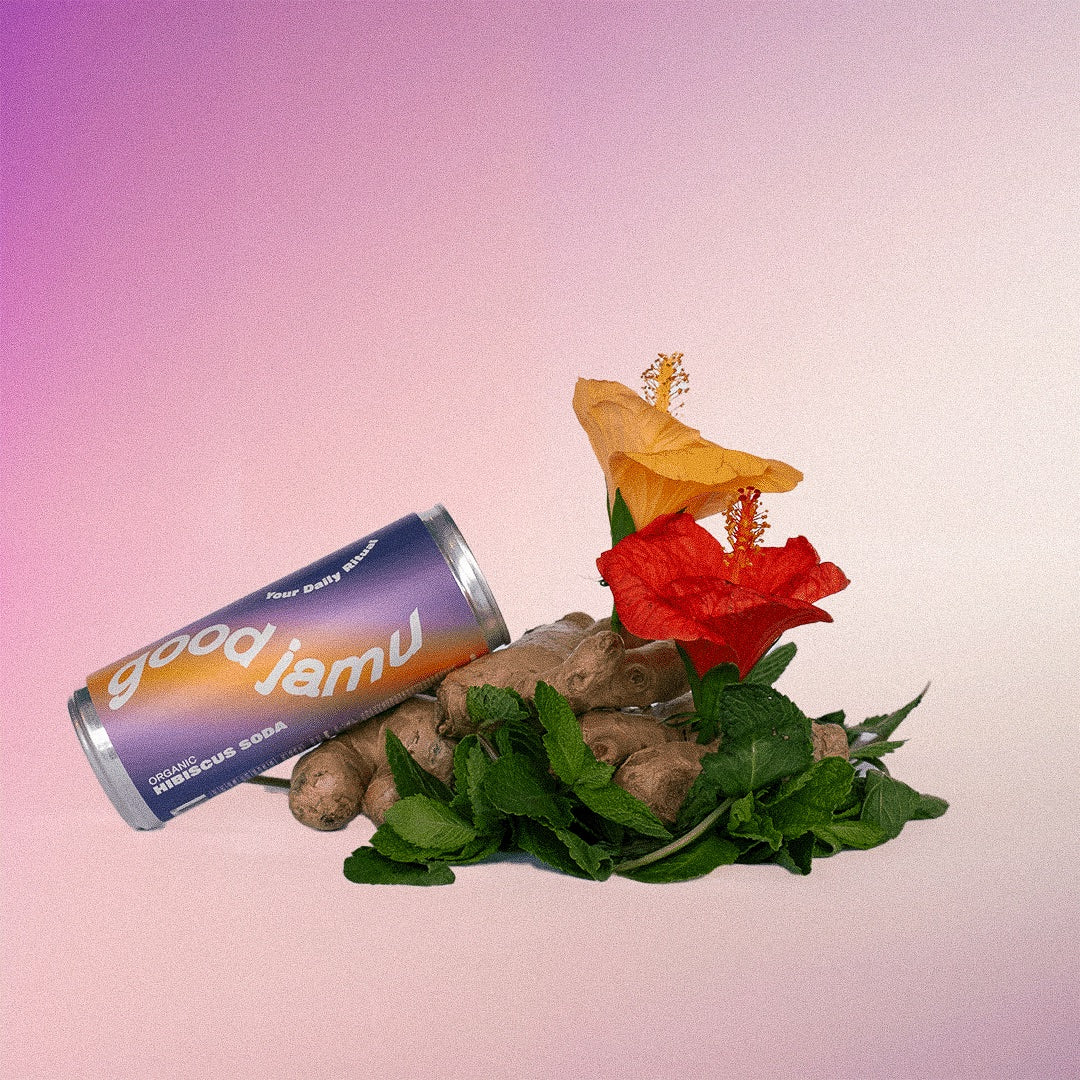
We added hibiscus to our Purple Can for three reasons:
- It balances the bold flavour of ginger
- It elevates the experience visually and in flavour
- It makes swapping soda feel natural
It has the elegance of wine, the refreshment of soda, and centuries of history in one glass.

Can you drink it every day?
In much of the world people already do. Zobo, bissap and agua de Jamaica are everyday drinks, served at home and sold on the street, in ordinary glass-sized servings.
As with any food or drink, if you have questions about what suits you personally, your doctor or pharmacist is the right person to ask.
What does it taste like?
Think cranberry meets pomegranate: tart, floral and refreshingly clean.
Some say it reminds them of a dry kombucha, or a red wine spritzer minus the booze and the fermentation funk.
How to drink it
You do not need to overthink it. Three easy ways:
- Over ice, with a wedge of lime
- Shaken with rosemary, served in a coupe for a mocktail
- Topped with sparkling water for a lighter spritz
Frequently asked questions
Is there caffeine in hibiscus?
No. It is naturally caffeine-free, like the rest of our range.
Why is it served after meals?
Custom, mostly. A sour, cold drink is refreshing after rich food, which is why it turns up at the end of the table from Dakar to Mexico City.
Where does the red colour come from?
From anthocyanins, the same family of pigments that give blackcurrants and red cabbage their colour. Nothing is added.
Can kids drink it?
Hibiscus tea is caffeine-free, and in plenty of countries children grow up on it.
Is your hibiscus soda organically certified?
Yes, our hibiscus soda is organically certified.
Try it in Good Jamu
Our Purple Can is a blend of hibiscus, ginger and lemon balm. No caffeine, no artificial ingredients, no colourings or flavourings. A sharp, grounding drink for afternoons, evenings, and everything in between.
Read next: jamu as a coffee alternative, global wellness rituals and everything about jamu.


