

In short
- Caffeine has a half-life of roughly five to six hours
- The afternoon dip follows your body clock, not your coffee intake
- Five caffeine-free options: turmeric, hibiscus, rooibos, chicory, adaptogens
- The ritual does the work: five minutes away from the screen
- Every Good Jamu drink is caffeine-free
What to drink instead of coffee at 4PM
Caffeine-free options with enough character to keep the ritual intact: turmeric drinks, hibiscus, rooibos, chicory coffee and adaptogen drinks. They do not replace the caffeine. They replace the moment.
That familiar afternoon dip hits hard. Your focus drifts. You reach for another cup of coffee. But here is the catch: a coffee at four is still with you at ten.
Drink coffee at 4PM and you are often trading a short lift now for a worse night later, which sets up the same slump tomorrow. Breaking the loop starts with having something else you actually want to drink.

Why coffee lands differently in the afternoon
Caffeine hangs around. The commonly cited half-life is roughly five to six hours, which means a decent share of that 4PM flat white is still circulating late in the evening. Individual variation is large. Some people clear it much faster than others, which is why one person's espresso after dinner is another person's 3AM ceiling-staring.
The practical version, which most people can test on themselves in a week:
- It can take longer to drop off than usual
- Sleep can feel lighter, even when the hours add up
- Mornings start slower, which invites the first coffee earlier
- And round it goes
If you want to know whether this applies to you, the test is free: move your last coffee to lunchtime for a week and see what happens.
5 caffeine-free coffee alternatives for the afternoon
1. Turmeric drinks: warming and golden
Turmeric drinks are earthy, warming and a little bitter, with the deep golden colour that turmeric gives everything it touches. It is a proper ritual drink: something to make slowly and hold in both hands.
Why it works at 4PM:
- Completely caffeine-free, so the time of day does not matter
- Warm, aromatic and substantial. It feels like a break, not a glass of water
- It gives you back a ritual where the coffee used to be
- Turmeric and ginger are among the most researched kitchen spices in the world
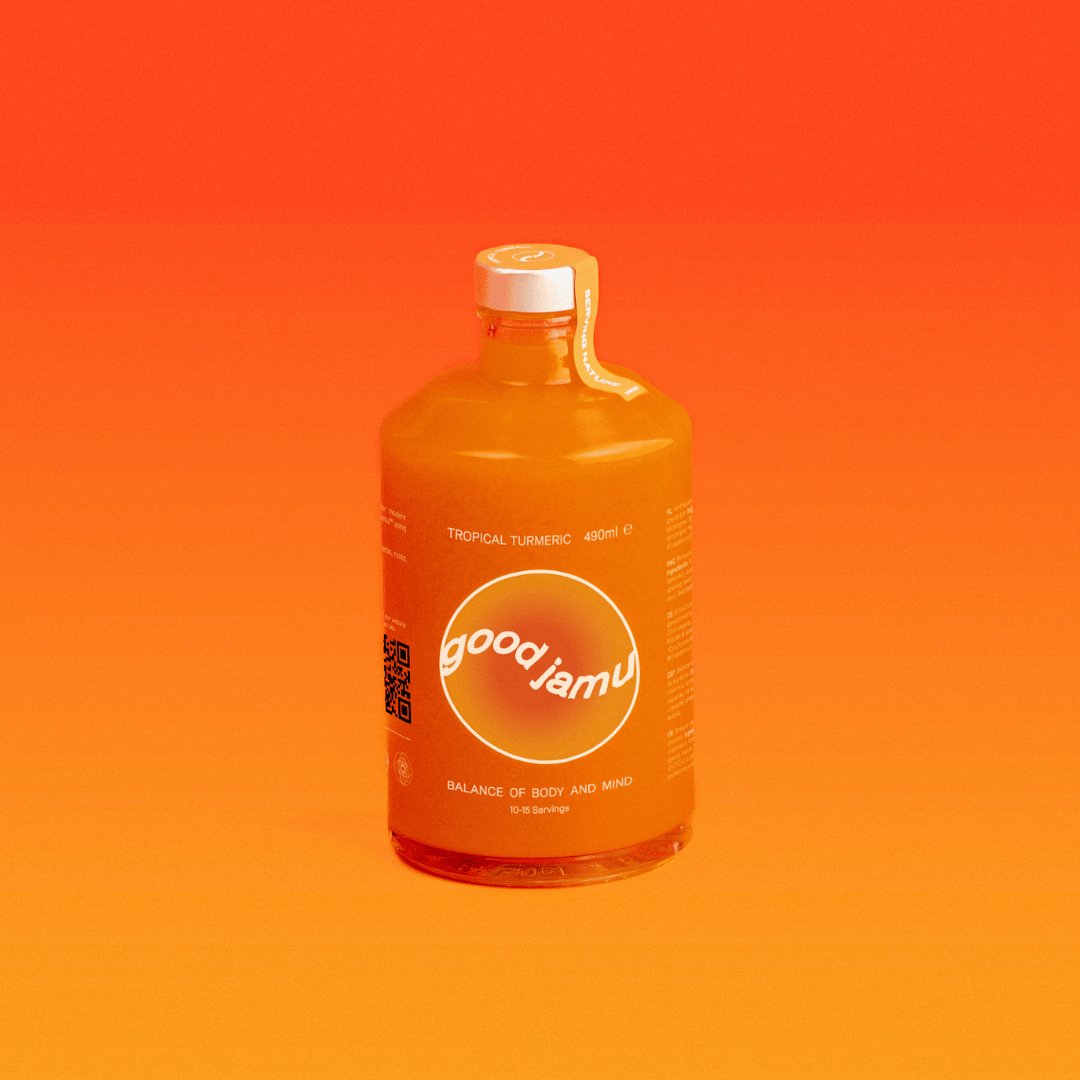
Try: Tropical Turmeric concentrate mixed with hot or sparkling water. Add fresh ginger for more heat.

2. Hibiscus: tart, refreshing, caffeine-free
Hibiscus delivers bold, coffee-like satisfaction without any caffeine. That deep red colour comes straight from the petals, and the flavour is properly sour, closer to cranberry than to a floral tea.
What it brings to the afternoon:
- Robust, sharp flavour that stands up on its own
- Naturally caffeine-free, hot or over ice
- Sour rather than sweet, a useful reset if you are off soft drinks
- Drunk across West Africa, Mexico and the Caribbean
Try: Hibiscus Soda, with hibiscus, ginger and lemon balm.

3. Rooibos: the naturally sweet option
Rooibos from South Africa is naturally sweet-tasting and caffeine-free. Unlike black tea, there is nothing in it to keep you up. It works hot or iced.
- Zero caffeine with a naturally sweet, rounded taste
- Takes milk well, which makes it the easiest swap for a builder's tea
- Very hard to over-brew or make bitter
- Versatile preparation options
4. Chicory root coffee: the coffee mimic
Chicory root creates the most coffee-like experience without actual coffee. Roasted and ground, it makes an earthy, dark, bitter brew. It has been blended with or substituted for coffee in New Orleans and across France for well over a century.
- Coffee-like taste, colour and ritual experience
- Chicory root is the main commercial source of inulin, a type of plant fibre
- Naturally caffeine-free, and cheap
- The closest thing to coffee on this list, if that is what you miss
5. Adaptogen drinks: the earthy option
Adaptogenic beverages are built around ingredients like ashwagandha or reishi mushrooms. Adaptogen is a marketing category more than a scientific one, so treat the label with a pinch of salt. The drinks themselves are worth trying on flavour.
- Deeply earthy, bitter and unusual. Not a gentle introduction
- Usually caffeine-free, though blends vary, so check the label
- Often blended with cocoa or spices to round out the bitterness
- Prices vary wildly for what is, ultimately, ground mushroom
How to build your own 4PM ritual
Replacing coffee is not just about finding a substitute drink. It is about creating a ritual that gives you the mental reset you are actually after.
The five-minute reset protocol
- Set a timer for five minutes. That makes the break a defined moment.
- Prepare your drink slowly. The making is half the ritual.
- Step away from screens. Your eyes and your head both get a break.
- Sip mindfully. Pay attention to taste, temperature and aroma.
- Return to your desk. The break is the point.
Do this daily for two to three weeks. The ritual becomes automatic, and the afternoon coffee stops being the default.
Why the afternoon dip happens at all
Your energy naturally dips between 2 and 4PM. This is the well-known post-lunch dip, and it tracks your circadian rhythm rather than your coffee intake. It happens to people who never touch caffeine, and it happens on days you skip lunch.
Which is worth knowing, because it reframes the problem. The dip is not a caffeine shortage to be corrected. It is a normal part of the day, and a break is a perfectly good response to it.
Frequently asked questions
Why is coffee more disruptive in the afternoon than the morning?
Simple arithmetic: caffeine takes hours to clear, so the later you drink it, the more of it is still present at bedtime. A morning coffee has most of the day to wear off.
Is green tea better than coffee at 4PM?
Green tea contains less caffeine than coffee, but it is not caffeine-free. If you are sensitive, a genuinely caffeine-free option is the safer bet late in the day.
Do herbal drinks actually help with focus?
The honest answer is that the pause does most of the work. Stepping away from the screen for five minutes with something warm resets your attention more reliably than any particular ingredient.
Are Good Jamu products caffeinated?
No, all Good Jamu drinks are completely caffeine-free. That makes them straightforward to drink in the afternoon or evening.
How long does it take to break the coffee habit?
Most people notice reduced coffee cravings within two to three weeks. The key is consistency and finding an alternative you genuinely enjoy.
A better 4PM, without the caffeine
You do not need another coffee at four. What you usually need is the thing the coffee was standing in for: five minutes, away from the desk, with something you enjoy drinking. Caffeine-free alternatives keep the ritual and drop the caffeine. That is the whole trick, and it is a small change that tends to stick.
Read next: jamu as a coffee alternative, everything about hibiscus and finding your third space.


